About us
Sustix.
Specialist in Plug & Play solar panel systems and Plug & Play home batteries
Sustix is a specialist in plug-and-play solar panels and the corresponding plug-and-play batteries. In addition, we also offer the associated accessories, such as smart energy meters, smart plugs, mounting accessories, ...
We stand for quality, innovation, and customer focus. All our products are homologated by Synergrid and can therefore be fully legally installed by the customer themselves.
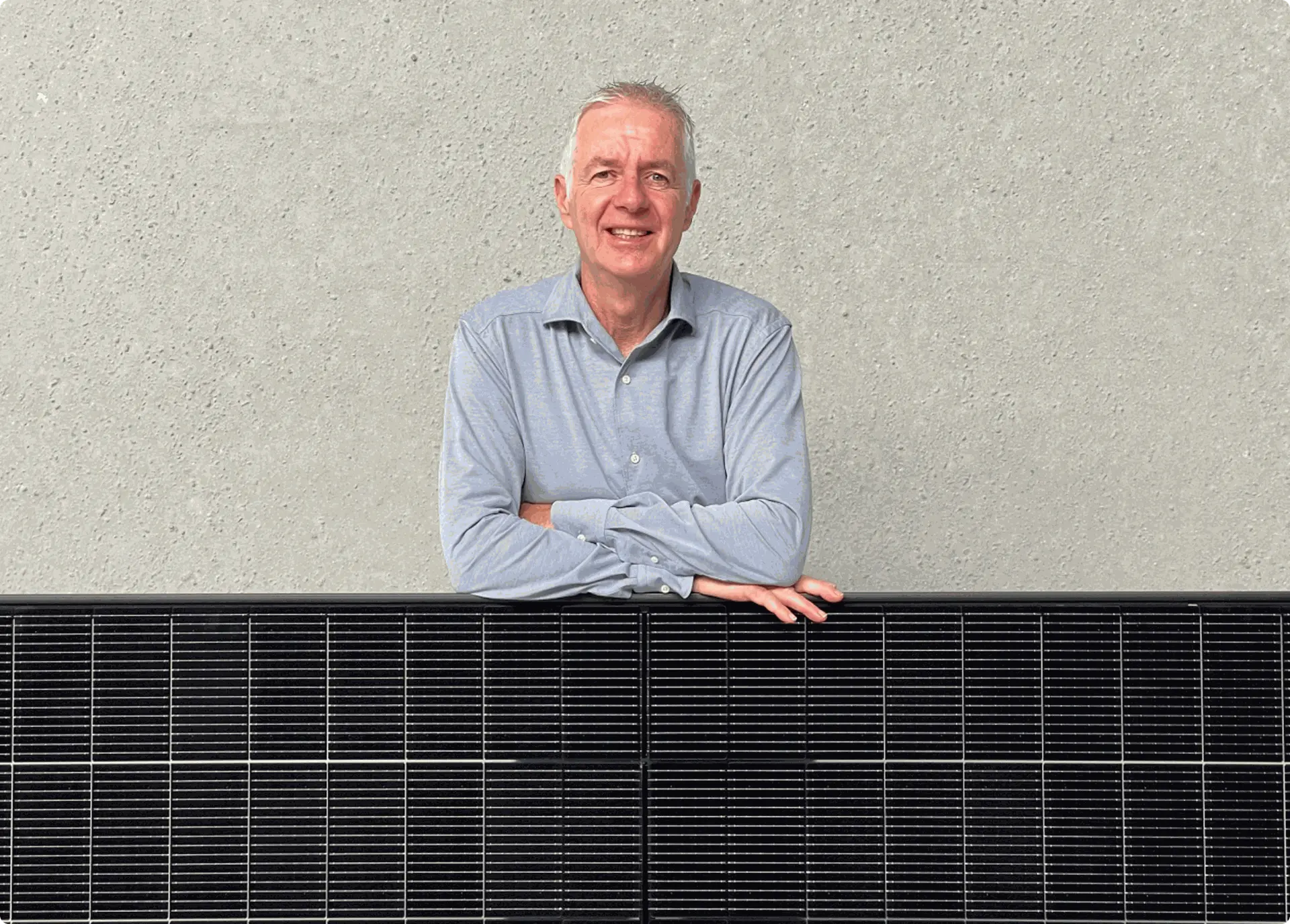
Sustix B.V. was founded by Jan Florin in April 2025.
Curious about what the name Sustix stands for?
‘Sustix’ combines ‘sust’, which refers to “sustainability”, with a catchy suffix ‘ix’.
The first part, ‘sust’, immediately evokes sustainability or sustainable, linking the name to the company's core values of being environmentally friendly and sustainable.“
The ending ‘ix’ gives the name a technologically advanced, innovative vibe, suggesting smart, cutting-edge solutions, which is perfect for our company that offers renewable or energy-efficient technologies.
Frequently asked questions
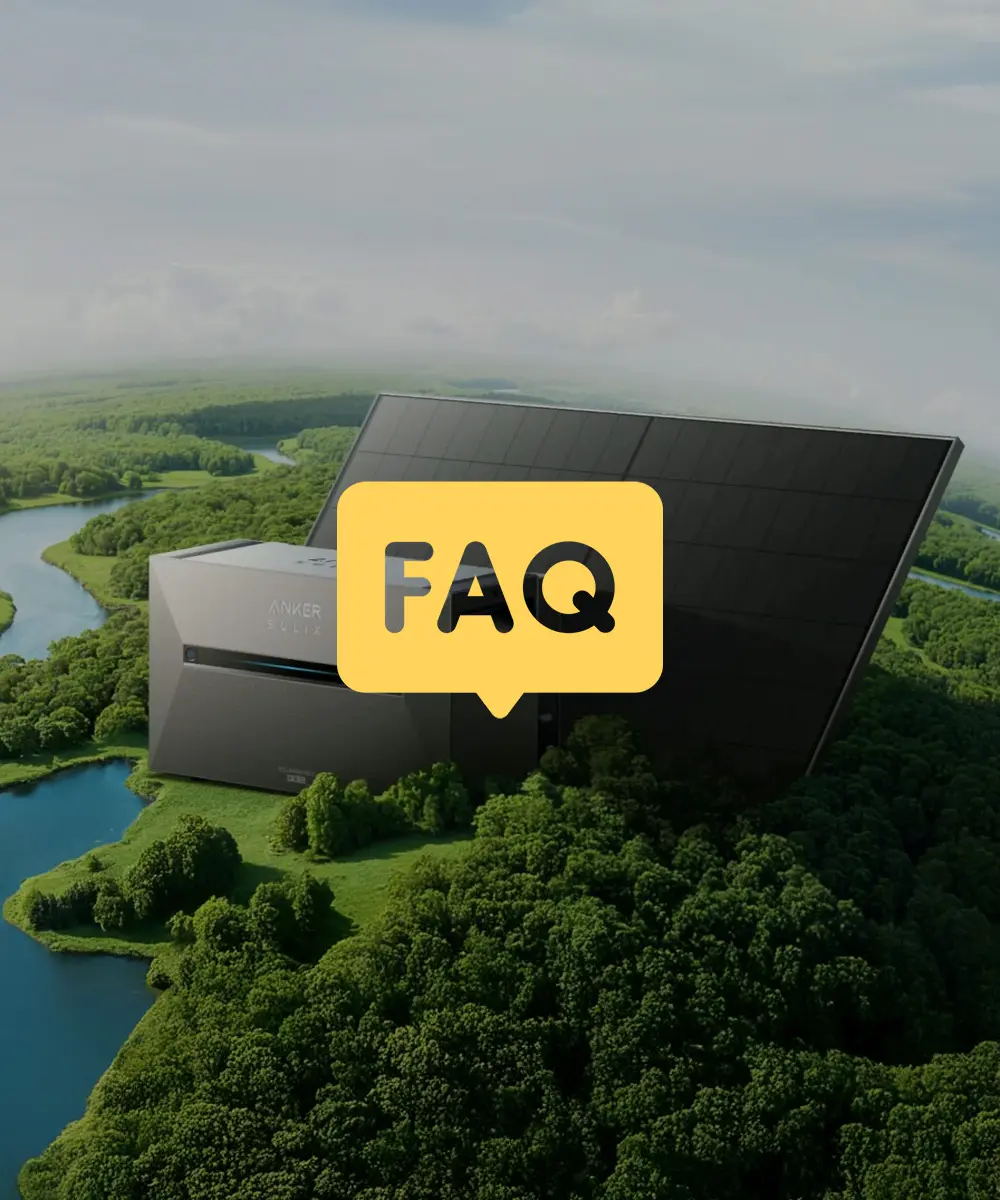
Plug & Play solar panels or solar panels with a plug are compact solar panel sets that you can connect yourself to a regular socket in your home. They generate solar energy via an integrated micro-inverter and deliver it directly to your electrical devices, just like a traditional appliance that consumes power.
These systems are also known as plug-and-play solar panels, balcony panels or plug-in solar panels . They usually consist of one or more solar panels, a micro-inverter, a sturdy mounting structure, and a standard power cord.
The big advantage? You don't need an installer or inspection – you can place them yourself on your terrace, balcony, wall, or flat roof. Within half an hour they are ready for use and you can immediately start generating your own sustainable energy.
Plug & Play solar panels – also known as plug-in systems called – work differently from traditional solar energy installations. Instead of a fixed connection to the electrical panel, they are simply plugged into a standard socket, just like a household appliance.
The biggest difference with traditional photovoltaic systems is the simplicity: you do not need a complicated installation or mandatory electrician. The set is designed to connect directly and immediately provide power to your home.
These systems are also more compact than regular roof installations. They usually consist of one to four panels and are ideal for those who want to start with solar energy in a simple and affordable way, without inspection or major works.
A typical plug-in solar kit includes one or two solar panels, a micro-inverter (which converts the generated electricity into usable power for your home), and a connection cable with a standard plug. Some systems also include a portable battery for energy storage, or an app for monitoring and management.
We If your roof is unsuitable (small, shaded, poor orientation) or the budget is too high, a plug & play system can be a viable solution. On one hand, some of these plug-in systems can be purchased with a budget of less than 500 euros including VAT. On the other hand, these systems can be installed on a smaller area of your roof or in other locations such as your balcony, a discreet corner of your terrace, your garden, or attached to a wall.
The profitability of plug-in PV systems is generally comparable to that of classic PV installations. Because these devices can be placed more flexibly, they can often be better oriented, which increases their yield. As with any PV system, the return depends on various factors: the installed capacity (Wp), the location of the modules, your consumption profile, the share of self-consumption of the generated electricity, your current electricity cost (€/kWh), the type of electricity contract (fixed or variable, single or dual tariff, capacity charge…), the future tariff framework (future time-of-use), and also the value of the electricity you inject, etc. In Belgium, the payback period for plug-in systems usually varies between 3 and 10 years, depending on the situation. These devices are designed to last 20 to 30 years. What is certain is that a high share of self-consumption remains an important lever to maximize profitability, regardless of whether you choose a classic fixed system or a plug-in solution. Additionally, of course, the cost of the “plug & play” system is a very important factor for the profitability of the investment.
How much you save with Plug-and-Play solar panels depends on your electricity price and the type of system you choose. A plug-in system of 800 W generates approximately 984 kWh annually, which at an electricity price of € 0.36 per kWh amounts to a saving of about € 210 per year.
If you opt for a more powerful plug & play system of 2000 W, you can generate up to 1790 kWh per year — good for a saving of approximately € 385.
The savings increase further if you add a home battery or storage system adds. This way you can use up to 100% of your self-produced energy and save up to € 28,000 on your electricity bill over 30 years.
Plug-and-Play solar panels are also interesting for those who already have a classic PV installation. With one or two extra plug-in modules, you can easily increase your production capacity and boost your direct self-consumption.
These devices are ideal for temporary or additional energy needs, without having to modify your existing installation. Thanks to their compact size and easy placement, they form a flexible and modular extension of your solar energy system.
You can install a plug-in solar panel set in various locations, on a balcony or facade, a garden shed, garden, terrace, flat roof, a sunny piece of land…. The most important thing is to choose a location that is exposed to the sun and tilted in such a way that maximum output is produced at the times you want, while avoiding shade and ensuring that you comply with all local or municipal regulations. The use of extension cords or power strips is not recommended.
The lifespan of solar kits is generally good, with warranties on the panels of up to 25 or 30 years. Manufacturers usually offer warranties on the various components of these systems (inverters, cables, mounts), ranging from 12 years to 30 years for some models. If they are moved frequently, the systems may wear out slightly faster. The lifespan of portable batteries depends on their technology and usage (number of charge/discharge cycles), but is typically 10-15 years, depending on the model.
While most Western European countries set a maximum of 600 W or 800 W for the PV plug-in inverter, Belgian federal regulations currently do not impose a specific power limit for these systems. You could theoretically install multiple systems, but for safety reasons, this is not encouraged. The European Commission recommends introducing a maximum power limit of 800 W per circuit for plug-in systems. The Belgian regional authorities are currently examining the necessity of this ceiling (max 800 W recently confirmed in Flanders). Aside from the safety aspect, the maximum power you can consider for your home in Belgium depends on the technical limits of your electrical installation and electricity needs. It is crucial never to connect multiple installations to the same socket to prevent overload. Also, check the capacity of your electrical installation.
The only systematically mandatory change is the purchase of a digital electricity meter. If you still have an old electromechanical meter, it is usually replaced free of charge by your distribution network operator. In many cases, no other adjustments are needed, as these systems are designed to be connected directly to a standard socket. However, if you have doubts about the capacity of an electrical circuit or the quality of your electrical installation, for example, if the installation is old, it is best to have your installation checked by an electrician. This way, you avoid the risk of overloading the electrical circuit to which the plug & play equipment is connected.
In most cases, there is no complicated installation or intervention from a technician required when purchasing a plug & play system. These systems are usually supplied with DIY fixtures and only need to be plugged into a socket. In certain cases, however, it may be advisable to engage an electrician. It is important to follow the manufacturer's instructions and observe basic safety precautions.
In the event of a power outage on the grid, a plug & play PV system will not work. These systems are designed to inject electricity into the grid when it is active and go into safety mode in the event of a power outage to avoid any electrical risk to your home installation and the grid. They are generally not equipped for stand-alone operation.
Not with a conventional plug-in system with a standard socket. Most of these systems are designed to be connected to the electricity grid to power your devices and potentially feed excess back into the grid. Their main purpose is self-consumption of the produced electricity, with a connection to the existing electricity network. However, there are also other systems specifically designed for autonomous operation outside the electricity grid, with various features and purposes (for example, to charge a smartphone, laptop, or other small USB-C devices).
Plug & play systems are designed to be disconnected, transported, and reinstalled elsewhere. Due to their mobility, they are a flexible solution, allowing them to
be more easily moved or temporarily used in another home. However, the distribution network operators must be informed of the source and destination address of the plug & play system. If the equipment is transported to another country or region, you should, of course, check the regulations at your destination address.
Plug-in systems are already profitable in Belgium on their own, which explains why there are currently no specific support measures or subsidies provided for these devices.
When determining the optimal additional capacity, various economic factors come into play, such as your consumption profile, the tariff structure of your electricity bill (fixed, variable, day/night meter, capacity tariff, dynamic tariff, etc.). In practice, it is often sufficient to add one or two panels to partially cover basic consumption (such as a refrigerator or standby consumption), or to use the system for partially charging an electric vehicle. The capacity of a plug & play system is also limited by technical factors such as the condition and capacity of your internal installation, the available space, and any regional or local regulations (such as urban planning rules or the 800 W power limit). In systems are already profitable in Belgium on their own, which explains why there are currently no specific support measures or subsidies for these devices.
Just like with a fixed PV installation or a home battery, it is recommended to check the terms of your fire or home insurance. In some cases, prior notification of the installation is required to ensure full coverage.
Flanders
You have a digital meter
▪ the total capacity of your entire installation is < 800 W: no registration or notification obligation (registration) with Fluvius
▪ the total capacity of your entire installation is > 800 W: registration with Fluvius is mandatory within 30 days of commissioning (https://www.fluvius.be/nl/in-de-kijker/plug-en-play-toestellen)
You have an electromechanical (analogue) meter
▪ the total capacity of your entire installation is < 800 W: registration with Fluvius is mandatory within 30 days of commissioning (https://www.fluvius.be/nl/in-de-kijker/plug-en-play-toestellen
▪ the total capacity of your entire installation is > 800 W: registration with Fluvius is mandatory within 30 days of commissioning (https://www.fluvius.be/nl/in-de-kijker/plug-en-play-toestellen. Afterwards, a digital meter will be installed. While waiting for this replacement, a prosumer tariff will be applied.
BRUSSELS AND WALLONIA
Aanmelding (registratie) bij Fluvius is verplicht voor alle vermogen (< 800 W of > 800 W) binnen de 30 dagen na ingebruikname (https://www.fluvius.be/nl/in-de-kijker/plug-en-play-toestellen
Just like with a fixed solar PV installation or a home battery, it is recommended to check the terms of your fire or home insurance. In some cases, prior notification of the installation is required to ensure full coverage.
In België is er geen maximaal toegelaten vermogen. In België kunt u dus meer dan 1, 2 of 3 plug & play panelen plaatsen. Wel is het zo dat, wat ook het totaal vermogen van uw plug & play zonnepaneel installatie is, er slechts maximum 800 Wat op uw thuisnet kan geïnjecteerd worden. Dit maximum vermogen van 800 W wordt automatisch geregeld door de micro-omvormer(s) of thuisbatterijen waarop uw zonnepanelen zijn aangesloten. De gehomologeerde toestellen zijn zo gefabriceerd en geconfigureerd.