Skip to Content

Return to blog

Plug-and-play devices


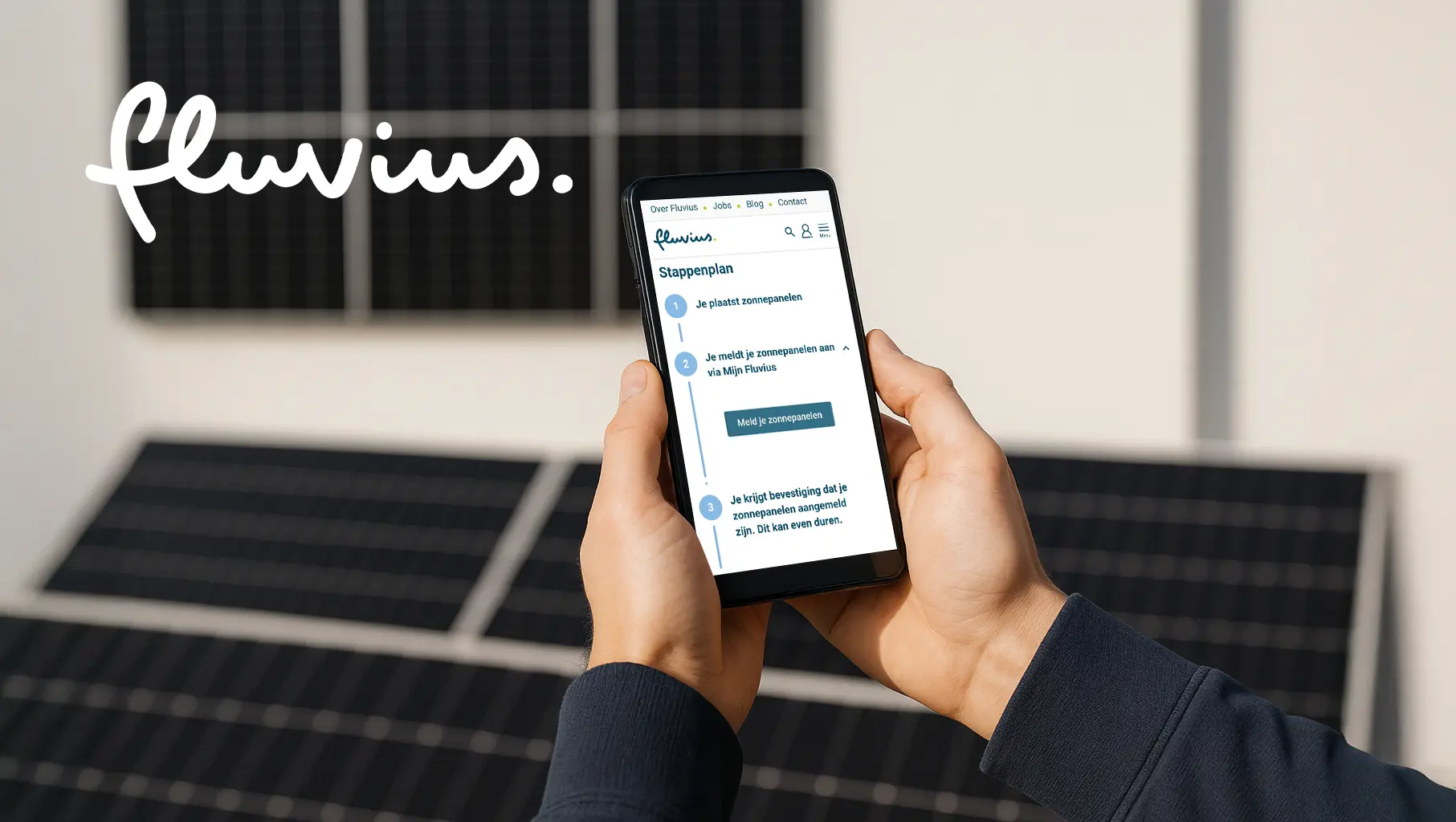
Person views energy yield via app of plug & play solar panels on smartphone
→ Plug-and-play devices

You can register your plug-and-play devices via My Fluvius from Wednesday 23 April at 1 PM.


Plug-and-play devices are allowed on our electricity grid. These plug-in solar panels or plug-in batteries are plugged into your socket to generate or store electricity. They are easy to use, but there are some rules attached. This ensures safe and optimal use.


Plug & play solar panel system with home battery next to house, sustainable energy use


→ What should I pay attention to when purchasing plug-and-play devices?

The main point of attention when purchasing plug-in panels or batteries is that the device is certified via Synergrid.


The P1 port of your digital meter may be used as an information source for smart controls, but according to Belgian law, it cannot serve a security function.


Make sure that your device has the CE marking which shows that your device has been evaluated and meets European standards regarding safety, health, and environmental protection.

If in doubt, consult an installer to check whether the circuit of the socket where you plug in the installation can handle the load and whether it is safe to use your device.


Consult your Owners' Association (VME, for apartment buildings), city or municipality to see if there are additional regulations. In some cases, they may impose restrictions on the use of plug-and-play devices.
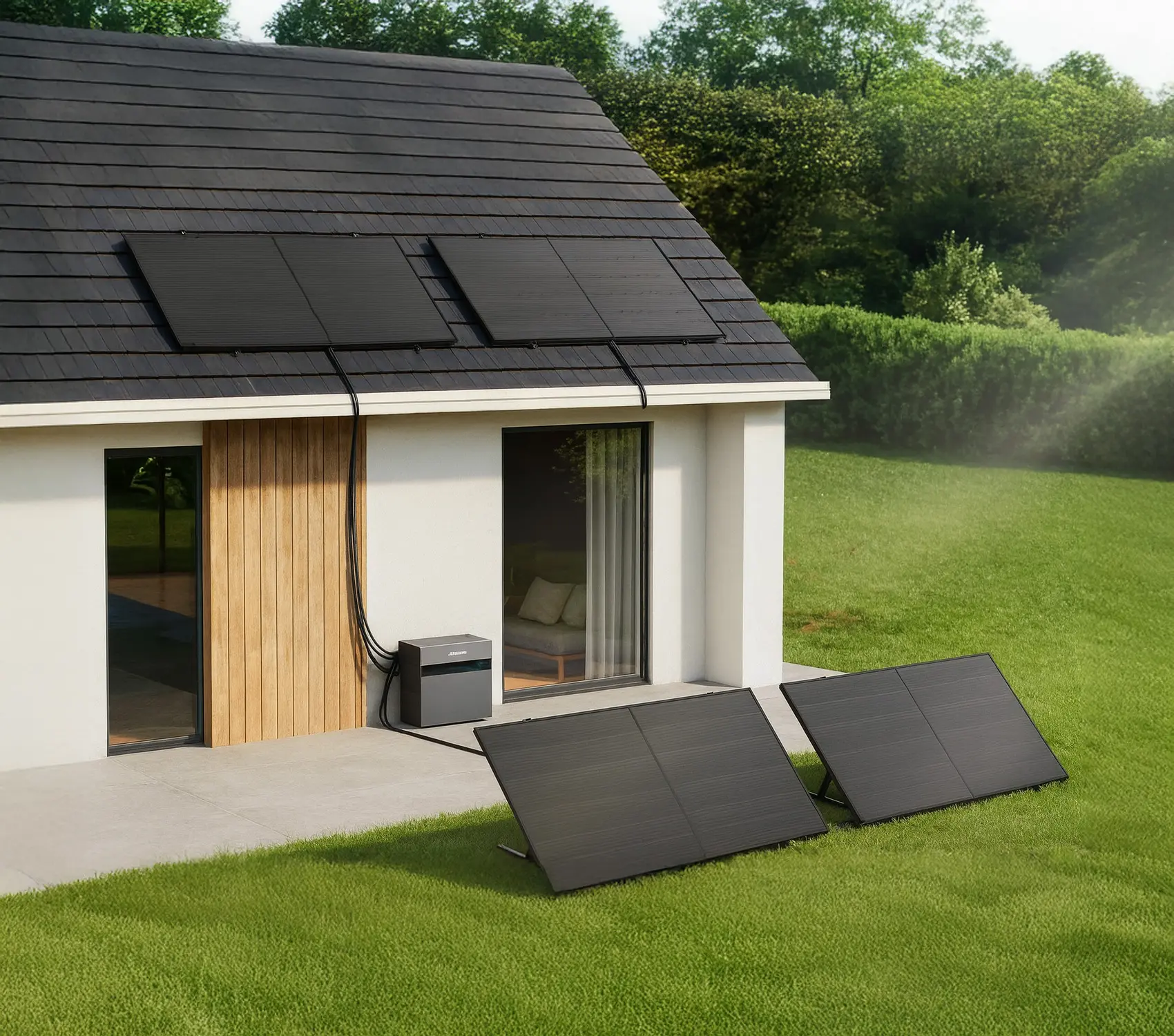
Plug & play solar panels from Sustix installed on the roof and in the garden of the house

→ Plug-and-play devices with a digital meter

Registration of plug-in solar panels in My Fluvius is not mandatory, but we recommend that you always report your plug-and-play devices. This makes it easier to receive your feed-in tariff more quickly. Those who do not register risk having to wait longer until we register that you are injecting surpluses. If your device has a power of 800 Watts or more, it is mandatory to register your device within 30 days in My Fluvius.


Moreover, the rules and limits for fixed installations also apply to plug-and-play devices or combinations thereof. So if you choose a plug-and-play device on top of an already reported fixed installation? Then you must report that plug-in solar panel or that plug-in battery as soon as the power of your total installation is 800 Watts or more.

→ Plug-and-play devices with an analogue meter

When you have an analogue meter, you must register your plug-and-play devices within 30 days of first use, regardless of the power of your device. Subsequently, we will install a digital meter so that you can enjoy an injection fee. While waiting for the installation of the digital meter, we will charge the prosumer rate based on the power of the plug-and-play device.


Moreover, the rules and limits for fixed installations also apply to plug-and-play devices or combinations thereof. So if you choose a plug-and-play device on top of an already reported fixed installation? Then you must report that plug solar panel or that plug battery anyway.


→ Can I use plug-and-play devices as a full-fledged solar panel or battery?

Yes, just like with fixed installations, solar panels or batteries, you can inject power into your internal installation or to the distribution network. To enjoy injection rates, you must always register your installation via My Fluvius, even if the registration limit of 800 Watts is not exceeded or you have a digital meter.


→ Are plug-and-play devices safe?

The homologation procedure of Synergrid ensures that these devices work correctly and safely with the distribution network, including during failures on the electricity grid. Therefore, it is mandatory to use only homologated devices that are on the Synergrid list in Belgium.

Of course, every electrical device must comply with European regulations, including a CE marking and a EU declaration of conformity. Furthermore, it must also comply with the general provisions of the AREI regarding electrical equipment connected to an electrical installation (see AREI book 1, Section 1.4.2 Electrical equipment, and Section 5.1.3 Compliance with the standards). When connecting and using such a plug-and-play device, you must always adhere to the manufacturer's instructions and safety regulations.

If you are unsure whether your internal installation is suitable for connecting such a device, it is best to contact an installer.

→ Should I have my internal installation re-inspected after connecting a plug-and-play device? 

According to the AREI (the General Regulation on Electrical Installations), these plug-and-play appliances are considered a device. They are therefore not part of the (fixed) electrical installation, and you do not need to have your internal installation (re)inspected. 

If you make adjustments to your electrical installation to install such a plug-and-play device, the inspection obligation follows the AREI, which describes when an inspection is necessary. 

For more information, you can visit the website of Fluvius, of the Flemish Regulator for the Electricity and Gas Market and the Flemish government.