Skip to Content

Keer terug naar blog

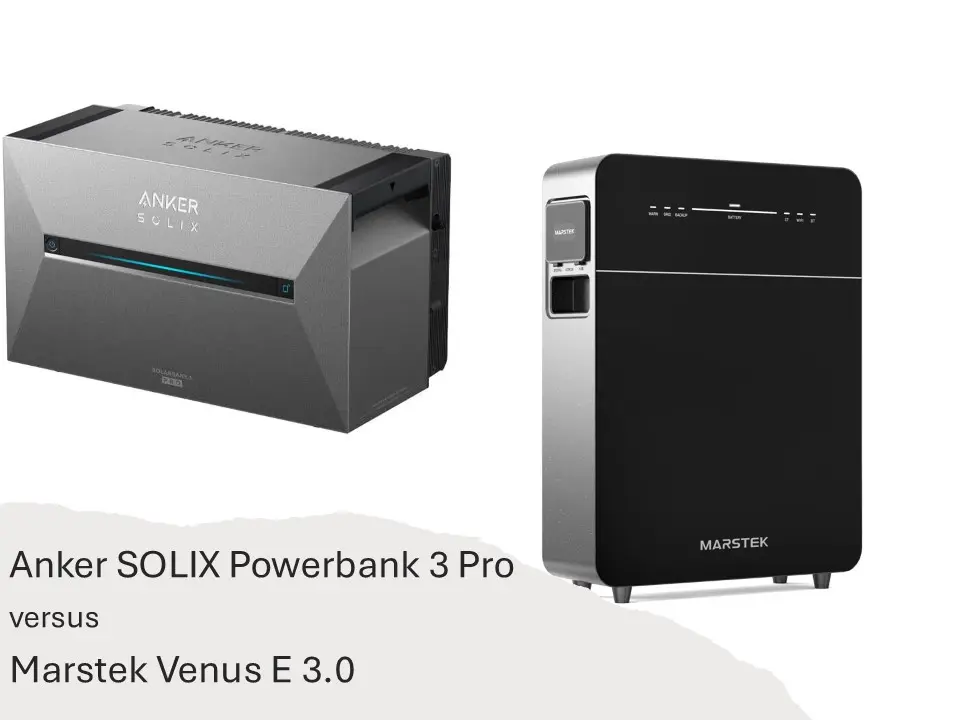
Marstek Venus E 3.0 - 5,&é kWh vs Anker Solix Solarbank 3 E2700 PRO


Comparison of Marstek Venus E 3.0 and Anker Solix Solarbank E2700 Pro plug & play home batteries with plug for energy storage.
→ Marstek Venus E 3.0 – 5.12 kWh vs Anker Solix Solarbank 3 E2700 Pro

More and more households are opting for a home battery. Now the reversing meter has almost disappeared everywhere, the need to store self-generated solar energy and use it at a later time is growing. This not only reduces energy costs but also makes you less dependent on the electricity grid.

Two popular plug-and-play models are the Marstek Venus E 3.0 and the Anker Solix Solarbank 3 E2700 Pro. Marstek has quickly established itself as one of the best-selling home batteries in Europe, thanks to powerful performance and smart technology. Anker, a global leading manufacturer of energy storage, offers a compact and expandable solution with the Solarbank 3 series. Both plug-in batteries are available at Sustix.

We put both systems side by side here and compare them in terms of capacity, power, expandability, ease of installation, and price — so you can determine which one best suits your situation.
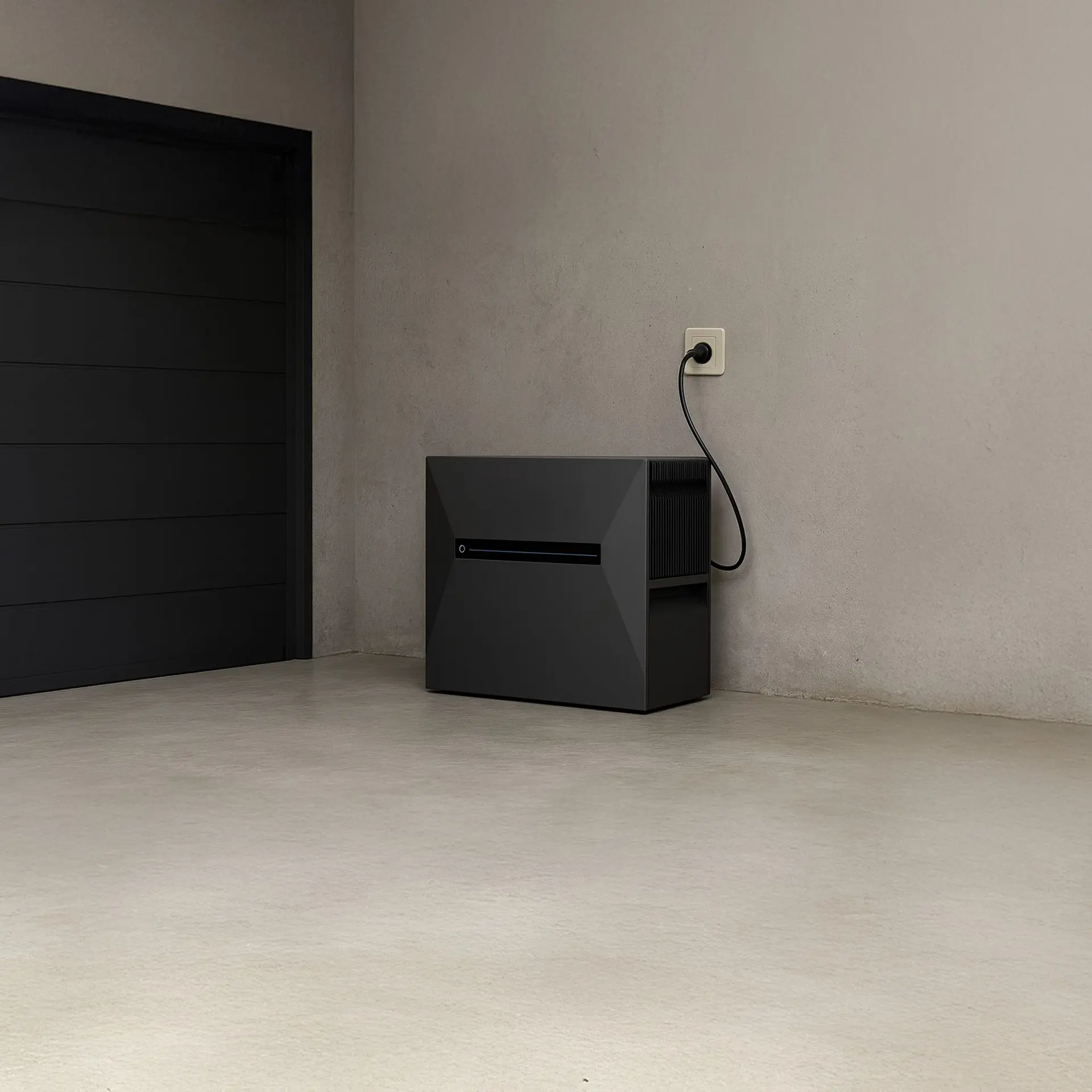
Anker Solix plug & play home battery installed against wall at home, storing solar energy via socket.


→ Concept and positioning

The Anker Solix Solarbank 3 E2700 Pro is a compact battery that you can easily connect via a power socket. The system is designed for immediate use: plug-and-play, with control via the Anker app. Thanks to the integrated MPPT inputs, you can connect it directly to solar panels, without an extra inverter or P1 meter. This battery is mainly aimed at users who want to increase their own consumption in an accessible way.

The Marstek Venus E 3.0 is also AC-coupled, but aims for more power, larger storage and advanced functionalities. It supports multiple charging modes, works with dynamic electricity rates and provides emergency power via the EPS output in the event of a power outage. This makes the Venus not only suitable for self-consumption, but also for households that want to remain operational during outages.


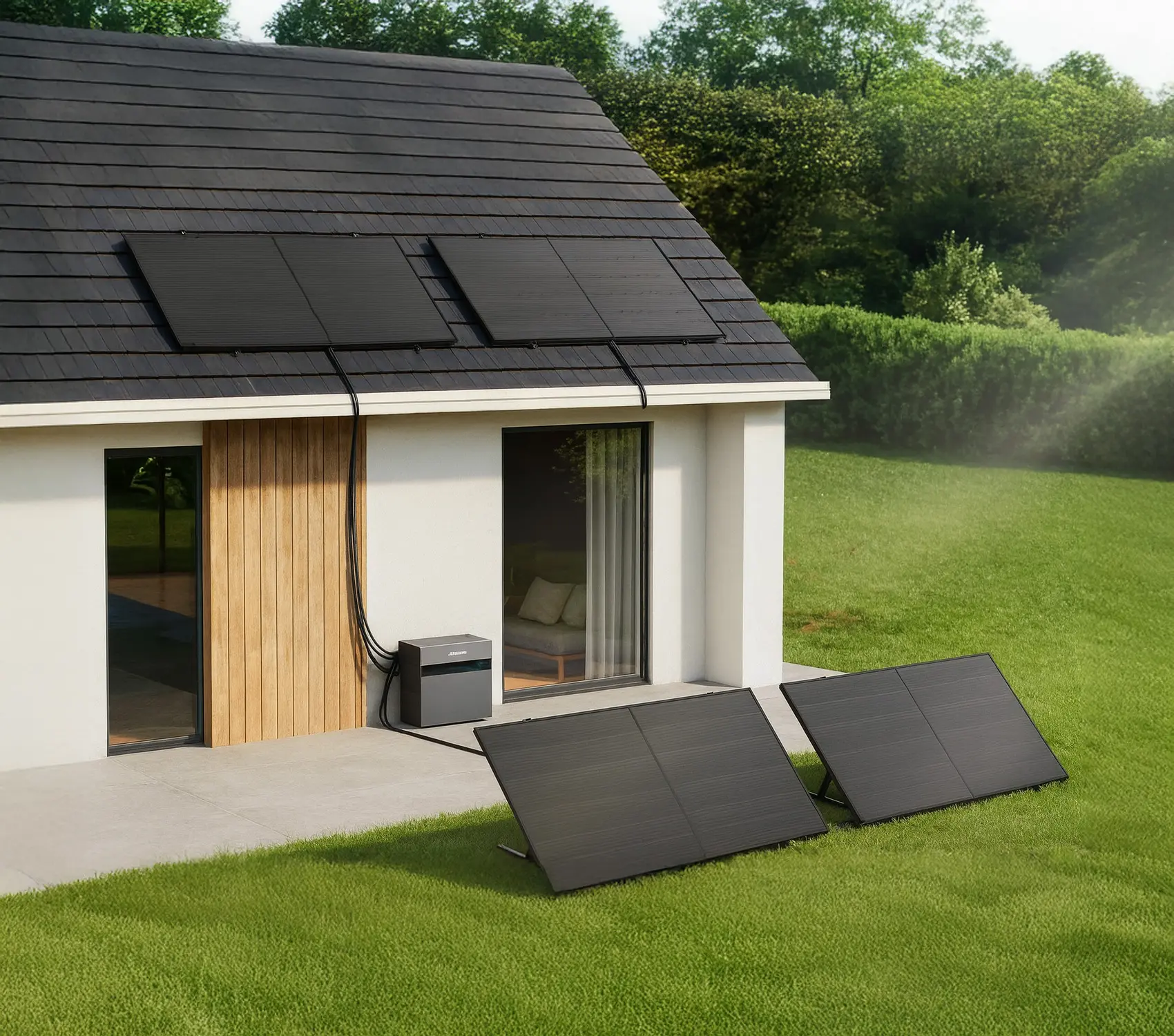
Home with Sustix plug & play solar panels and home battery, plug-and-play solar energy set connected via standard power socket.


→ Storage capacity and expansion options

The Anker Solarbank 3 offers 2.688 kWh storage per unit. This can be expanded with up to five BP2700 modules, allowing you to reach up to 16.1 kWh per unit. Additionally, you can install up to three complete Solarbank 3 systems in parallel, provided each is connected to a separate circuit in the fuse box. This way, you can expand both vertically (stacking modules) and horizontally (units side by side) to a total of 48.3 kWh.

The Marstek Venus E 3.0 has a base capacity of 5.12 kWh per battery. With a single-phase connection, you can combine three batteries (15.36 kWh), and with a three-phase setup, even nine (46.1 kWh). This makes the Venus particularly suitable for larger households or business applications.


→ Power and performance

The Anker Solarbank delivers a continuous 1,200 watts, with peaks of up to 1,800 watts. This is sufficient for standard household appliances, but less suitable for multiple heavy consumers at the same time. Thanks to the PV input of 3,600 watts, divided over four MPPT inputs, you can connect it directly to solar panels.

The Marstek Venus e 3.0 delivers a standard 800 watts per battery via a regular socket. When connected to a separate circuit, it increases to 2.5 kW per battery. Multiple batteries together provide more power: two units deliver 5 kW, three 7.5 kW, and in a three-phase installation even more than 20 kW. This power is also available during a power outage via the EPS output, making the Venus extremely suitable for households with a high consumption or devices such as heat pumps and induction cooktops.


→ Installation, dimensions and ease of use

The Anker Solarbank is compact and light (46 × 25.4 × 27.9 cm, 29.2 kg), and easy to install via a socket. It is IP65 certified and can function both indoors and outdoors at temperatures from −20 to +55 °C. For parallel connection of multiple units, a separate circuit is required, for which an installer is recommended.

The Marstek Venus is larger and heavier (62 × 48 × 16 cm, approximately 60 kg) and is usually placed freestanding with an included base plate. This battery is also IP65 certified and withstands the same temperature range. Although it is delivered plug-and-play, professional installation is advisable for multiple units or a three-phase setup.

→ Smart features and control

Both systems have smart features to optimize energy use:

  • Anker offers various modes via the app, such as Smart mode (based on dynamic rates), Self-Consumption mode and Schedule mode. The Solarbank can automatically respond to price fluctuations and work with smart meters and accessories such as smart plugs.
  • Marstek offers similar functionality. The Venus supports AI optimisation, self-consumption and manual settings. It can be linked to home automation systems via an open API and works with external energy meters such as the Marstek CT002. The EPS output provides emergency power in case of failure.


→ Price and costs per kWh (as of 16 September 2025)

The Anker Solarbank is ideal for smaller households looking for a compact, quiet and easy-to-install solution. Thanks to its modular design, it is also flexible to expand to a significant capacity.


The Marstek Venus is suitable for those who need more power and storage, or want emergency power in case of failure. Due to its scalability and powerful performance, this system is future-proof and versatile.


→ Which one suits you best?

The Anker Solarbank is compact and light (46 × 25.4 × 27.9 cm, 29.2 kg), and easy to install via a socket. It is IP65 certified and can function both indoors and outdoors at temperatures from −20 to +55 °C. For parallel connection of multiple units, a separate circuit is required, for which an installer is recommended.

The Marstek Venus is larger and heavier (62 × 48 × 16 cm, approximately 60 kg) and is usually placed freestanding with an included base plate. This battery is also IP65 certified and withstands the same temperature range. Although it is delivered plug-and-play, professional installation is advisable for multiple units or a three-phase setup.

→ Conclusion

Both systems have their own advantages. The Anker Solarbank excels in compactness, ease of use and simple installation, and can be expanded to 48.3 kWh. The Marstek Venus offers more power, greater scalability and extensive smart features, including emergency power supply.


Do you mainly want to increase your own consumption without technical installation? Then choose the Anker Solarbank. Are you looking for a more powerful system that grows with your energy needs and continues to work in case of failure? Then the Marstek Venus is a smart investment.