Skip to Content

Return to blog

Optimal orientation of a plug solar panel


Optimale oriëntatie van een stekker zonnepaneel
→ The yield of a plug solar panel system strongly depends on 3 factors.

A Plug & Play solar panel system can only generate electricity when sunlight hits the solar panels. The frequency and intensity of sunlight largely determine the yield of your solar panel system. Your plug-in solar panel system is always optimally positioned when the sun's rays fall vertically and for as long as possible on the solar panels. The more sunlight your system absorbs, the higher the energy yield.

The yield of a Plug & Play solar panel system depends strongly on three factors: the orientation, the tilt angle and the installation location. Because solar panels only generate power when sunlight directly reaches the cells, it is essential to position the panels so that they can capture the light as long and as directly as possible.

 
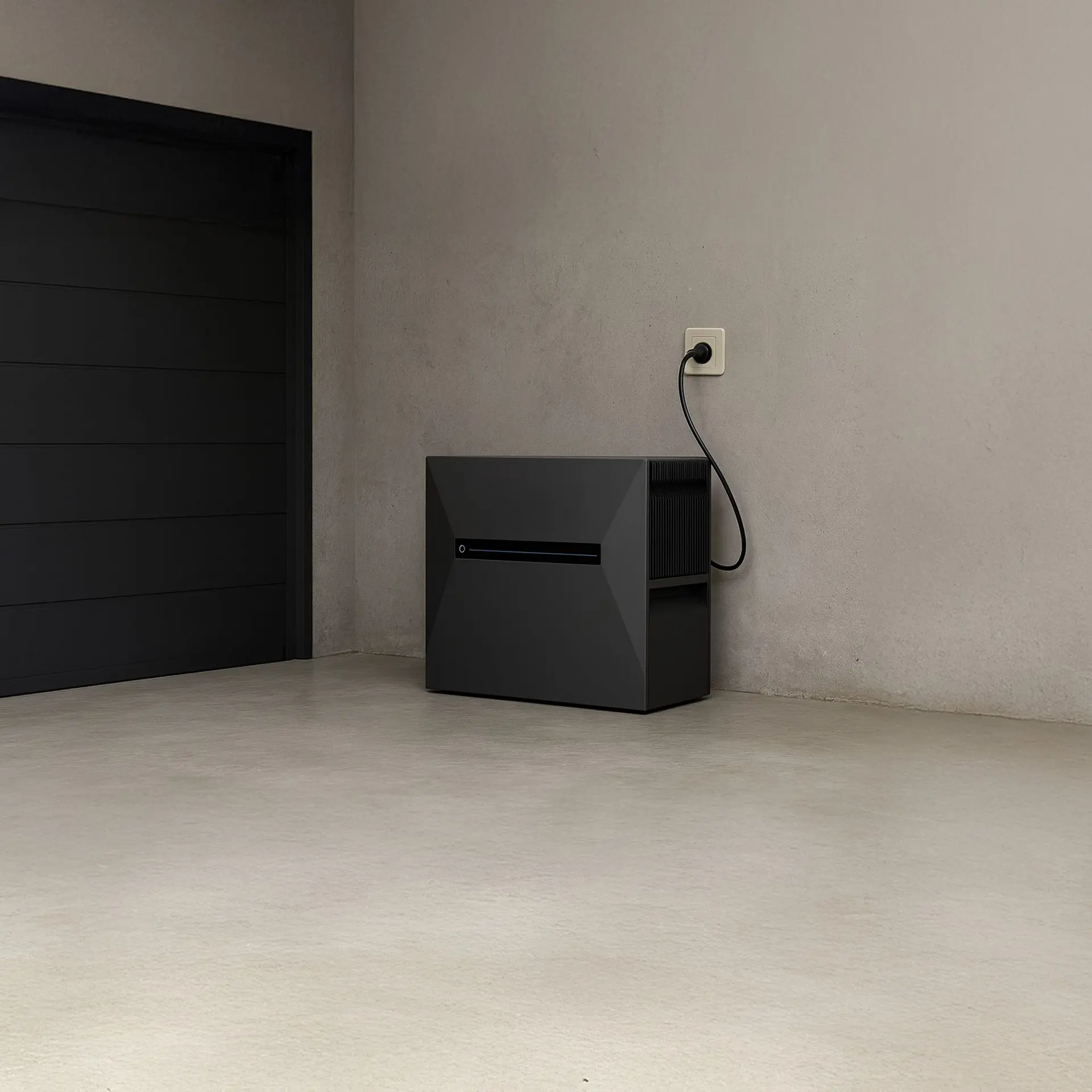
Anker Solix plug & play home battery installed against wall at home, storage of solar energy via socket.


→ 1. Orientation: the correct direction determines the majority of the yield

South:

The most efficient orientation for plug solar panels is to the south, because this is where the most sun hours occur throughout the day and year. For those seeking maximum yield and a quick payback period, this is the ideal direction.

East and west:

An east or west orientation can also yield very good results.

Even if you plan to install multiple solar panels, a east-west orientation can provide a good yield. By placing some panels to the east and others to the west, you can optimally benefit from the morning and evening sun. This spreads your electricity production over the day , which is especially beneficial if you consume a lot of energy in the morning for breakfast and in the evening for cooking.

North: not recommended

A northern orientation is possible, but yields a clearly lower output and is therefore only chosen when there is no alternative.


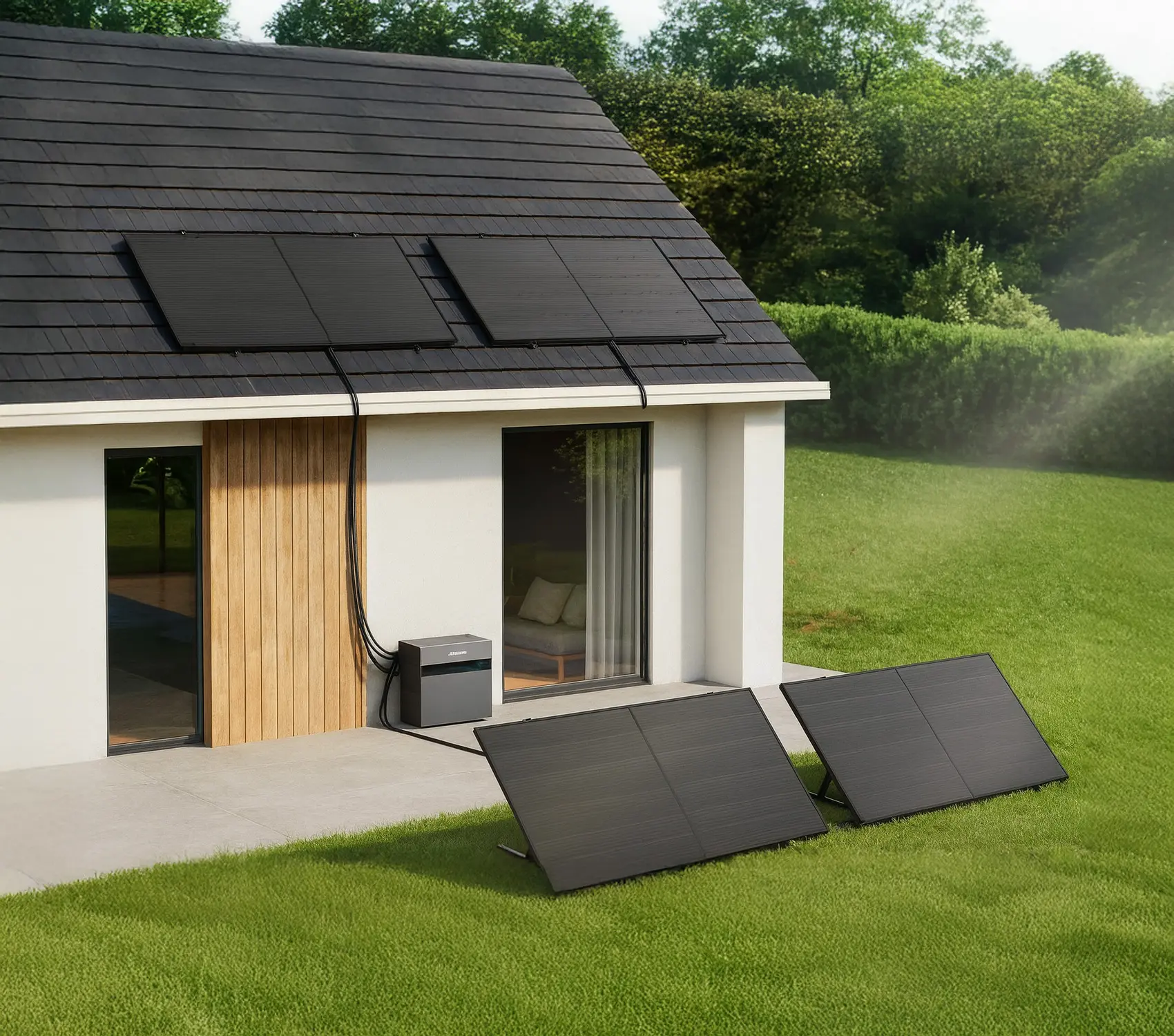
Home with Sustix plug & play solar panels and home battery, plug-and-play solar energy set connected via standard socket.


→ 2. Tilt angle: the steeper or flatter, the different the yield capacity and expansion possibilities

The tilt angle affects how much sunlight the module captures during the day. The optimal range depends on the orientation and the season.

Annual optimal angle

  • With a south-facing installation the best annual average tilt angle is usually between 20 and 40 degrees.
  • With strong towards east or west different orientations perform panels better at a flatter angle, because the sun is lower in the sky when it captures their maximum light.

Seasonal adjustment

The position of the sun changes throughout the year. Theoretically, it would be ideal to adjust the angle each time:

  • Summer: 20–40° (sun is high)
  • Spring/autumn: 40–55°
  • Winter: 55–60° (sun is low)

Many plug-in solar panel systems do not offer this flexibility, yet this need not be a problem: even with a less optimal fixed angle, the yield remains acceptable.

Limitations due to installation location

On balconies, the tilt angle may be limited by safety regulations, for example, 60° or more when panels are attached to a railing. Steep panels get dirty less quickly, while flat panels require maintenance more often.


→ 3. Installation location: avoid shade and ensure stability

Shade: the biggest enemy of yield

Shade must absolutely be avoided.

Even small shaded areas — from trees, chimneys, antennas, other balconies or buildings — can significantly reduce the performance of the entire module.

Possible locations and their characteristics

  • Balconies:
    Limited directional options and tilt angles, but easily accessible and suitable for plug-and-play systems. South, east, and west balconies are ideal; north balconies yield less.
  • Flat roof:
    The most flexible option. With frames, both the direction and the tilt can be freely chosen. Multiple panels can be arranged without mutual shading.
  • Facades:
    Similar to balconies in terms of tilt, but more flexibility in direction. Connection to power can be slightly more complex.
  • Garden, terrace or garage roof:
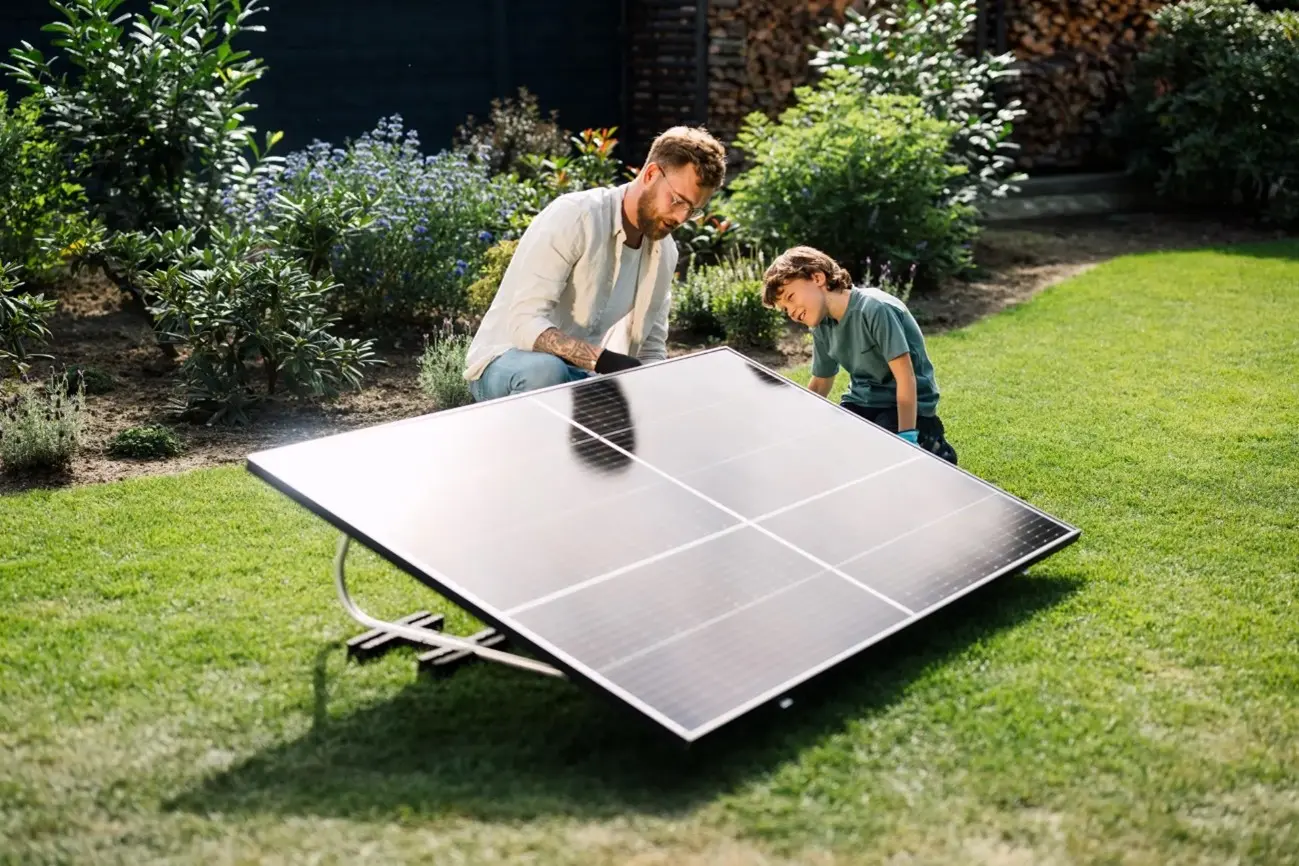
    Maximum freedom in orientation and tilt angle. Arrangements on frames (such as 20° mounts) are often chosen for stability and high yield. More frequent cleaning required.
  • Sloped roofs:
    Tilt is predetermined; direction often limited to two options. Less shading, but harder to access.


→ 4. Alignment with electricity consumption

The best orientation depends not only on sunlight, but also on your usage pattern:

  • ’s Morning high consumption → east
  • ’s Evening high consumption → west or southwest
  • Not home during the day → battery storage or east-west arrangement
  • Even power demand → east-west or south


→ 5. Flexibility and maintenance

Plug-in solar panel systems are generally easy to move and adapt when light conditions change, for example during renovation, seasonal shading or relocation. Regular checks of the position and any pollution are worthwhile, as this can measurably increase the yield.

→ Conclusion

When optimally orienting a plug-and-play solar panel system, several factors must be taken into account: direction, tilt angle, location, shading and ultimately your own electricity consumption. The general rule of thumb for orientation is:

  • The highest yield is achieved with a south orientation
  • Also east-west and combinations of these remain excellent alternatives, especially when the consumption hours and practical circumstances align with this.
  • A tilt angle of 20–40° is required (adjustable per season for maximum efficiency)
  • Free of shading should be placed
  • Matching your own consumption profile
  • Located where both stability and orientation can be well achieved
  • With a Plug & Play home battery you can store the generated solar energy for later use.
→ East-west orientation of solar panel systems, the future?

While south-facing panels reach their peak production around midday, an east-west configuration provides a more balanced energy production throughout the day. Solar panels that face the east generate energy in the morning hours, while west-facing solar panels reach their peak in the afternoon and early evening. This pattern aligns better with household energy consumption, where demand is higher early in the morning and later in the day than around midday. 

The alternative orientations are already profitable and are expected to become even more profitable in the future. South-facing solar power systems will increasingly need to be switched off due to negative electricity prices caused by the surplus of supply in the afternoon when there is relatively little demand for electricity. Most consumers use energy in the morning and evening. It is precisely at those times, when demand is higher and electricity prices rise, that you want to generate electricity with your solar panels. Feeding back into the grid then occurs at high prices or you avoid expensive purchases. With a spread across different orientations, it becomes slightly easier for consumers to consume more electricity directly and thus achieve a higher percentage of self-consumption.’

Economic advantage Although individual solar panels in an east-west configuration generate on average 10 percent less energy than optimally south-facing solar panels, the financial return is often higher because the kilowatt-hours are much more frequently consumed directly, thereby avoiding feed-in costs. Additionally, simply more solar panels can be installed, which leads to more output outside the summer months and thus more generation in the months when it is really needed.


North: surprisingly profitable.  Surprisingly, even solar panels placed to the north can be profitable. They produce about 50 to 60 percent less energy than southern solar panels, but can still provide a good solution in specific situations. North-facing solar panels capture a lot of diffuse light, especially in countries with a lot of cloud cover like Belgium. They produce very evenly throughout the day and can be a good complement to south-, east- or west-facing installations to achieve a constant energy production throughout the day. With regard to grid capacity, the economic logic of non-south-facing panels is becoming stronger. The future of solar energy no longer seems to be primarily focused on the south, but on a smarter orientation that better aligns with both the energy prices and the challenges of the modern energy transition. South-facing solar panels remain very profitable when self-consumption is high in the middle of the day.

Vertically oriented solar panel installations also offer advantages, especially for seasonal distribution of energy production. A south-facing vertical solar panel has a good yield in winter, for example. The sun is low at that time, and a solar panel must be almost upright to receive the best sunlight. Because the more perpendicular the irradiation, the higher the yield. A vertically installed solar panel facing south is therefore particularly interesting in winter. Not only because of the yield, but also because we collectively have a shortage of solar energy during that period. Not only for south-facing walls, but also for east and west-facing walls, good results can be achieved. When the sun rises in the summer from the east and is still relatively low in the morning hours, the yield of such a vertical east-facing solar panel is very good, and in the evening this applies to vertical west-facing solar panels.


Strategy: as much roof area as possible. The best strategy is to utilise as much roof area – and where possible also walls – as possible. Solar panels have become cheap, so it is not a problem to sometimes have to throw away your surplus on summer days. It would therefore be good to fill your roof as much as possible. Even on the north side, if you have a north-south roof, you can achieve a good yield. We must realise that solar power has a lot of value, but less value in the middle of the day in summer. The value of solar power from non-optimally oriented solar panels actually increases, as they produce solar power outside of peak hours.

If you have a home battery, then the generation from the south-facing solar panels is of course a less significant problem.